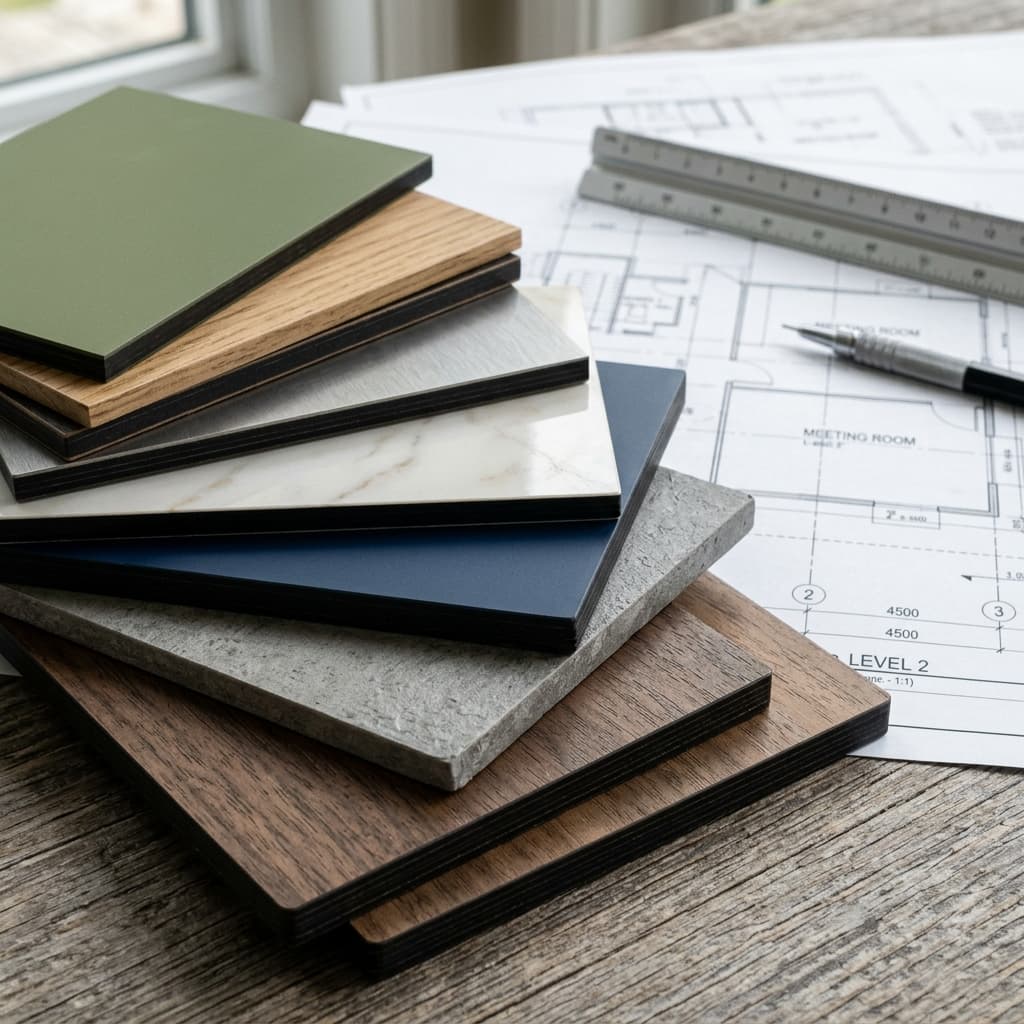
Defining HPL and its Manufacturing Process
HPL stands for High Pressure Laminate. It is an ultra-strong engineered product made by impregnating layers of kraft paper with phenolic resins, then compressing them under pressures exceeding 5 MPa and temperatures up to 150°C. This process results in a solid, non-porous, and incredibly durable board known as "Compact Phenolic."
Top 5 Benefits of Using HPL in Saudi Arabia
In the KSA environment, characterized by heat and high humidity in coastal areas, HPL outperforms other materials for several reasons:
| Specification | Value |
|---|---|
| Water Resistance | Zero moisture absorption, preventing swelling or rot |
| Antibacterial | Non-porous surface prevents microbe growth, ideal for healthcare |
| Impact Resistance | Highly resistant to breakage and intentional scratching |
| Easy Cleaning | Can be cleaned with water and strong disinfectants |
| Versatile Design | Available in hundreds of colors and natural wood textures |
Where do we use HPL in our projects?
Because of its practical properties, HPL is used in many applications, including toilet cubicles in malls, personal lockers in gyms and schools, wall cladding in hospital operating rooms and laboratories, and even countertops in restaurants and school labs. The system requires correct selection of thickness and hardware to maintain its performance.