In healthcare facilities such as hospitals, clinics, and laboratories, choosing architectural finishing materials is not just an aesthetic or economic matter; it is a decision that affects patient safety and the reduction of Healthcare-Associated Infections (HAIs). In this context, the importance of non-porous surfaces that are easy to clean and disinfect has become central. This is where Compact Phenolic (HPL) panels can serve as a practical choice for wall cladding, restroom partitions, and ICU dividers.
Why are HPL Panels Hygienic and Antibacterial?
1. Completely Non-Porous Surface: Bacteria and fungi require a moist, porous environment to breed. HPL panels are manufactured under extreme temperature and pressure, resulting in a sealed surface that helps prevent liquids and contaminants from penetrating.
2. Seamless Installation: As mentioned in our ceramic comparison, grout lines are the primary hiding spot for microbes. HPL panels cover large areas with precise or concealed metal profiles that are easier to sanitize.
3. Hygiene-Oriented Specifications: Some healthcare projects specify special finishes or treatments, so the datasheet and consultant requirements should be reviewed before approval.
Enduring Harsh Disinfection Protocols
Hospitals use strong chemicals for continuous sterilization. Ordinary surfaces (like paint or regular plastic) fade, corrode, or peel under the effect of these chemicals. HPL panels are suitable for many daily cleaning and sterilization protocols when the correct grade is selected and the manufacturer’s guidance is followed.
Where is HPL Used in Hospitals?
- Operating Room and Corridor Wall Cladding: To protect walls from moving bed impacts and facilitate rapid sterilization.
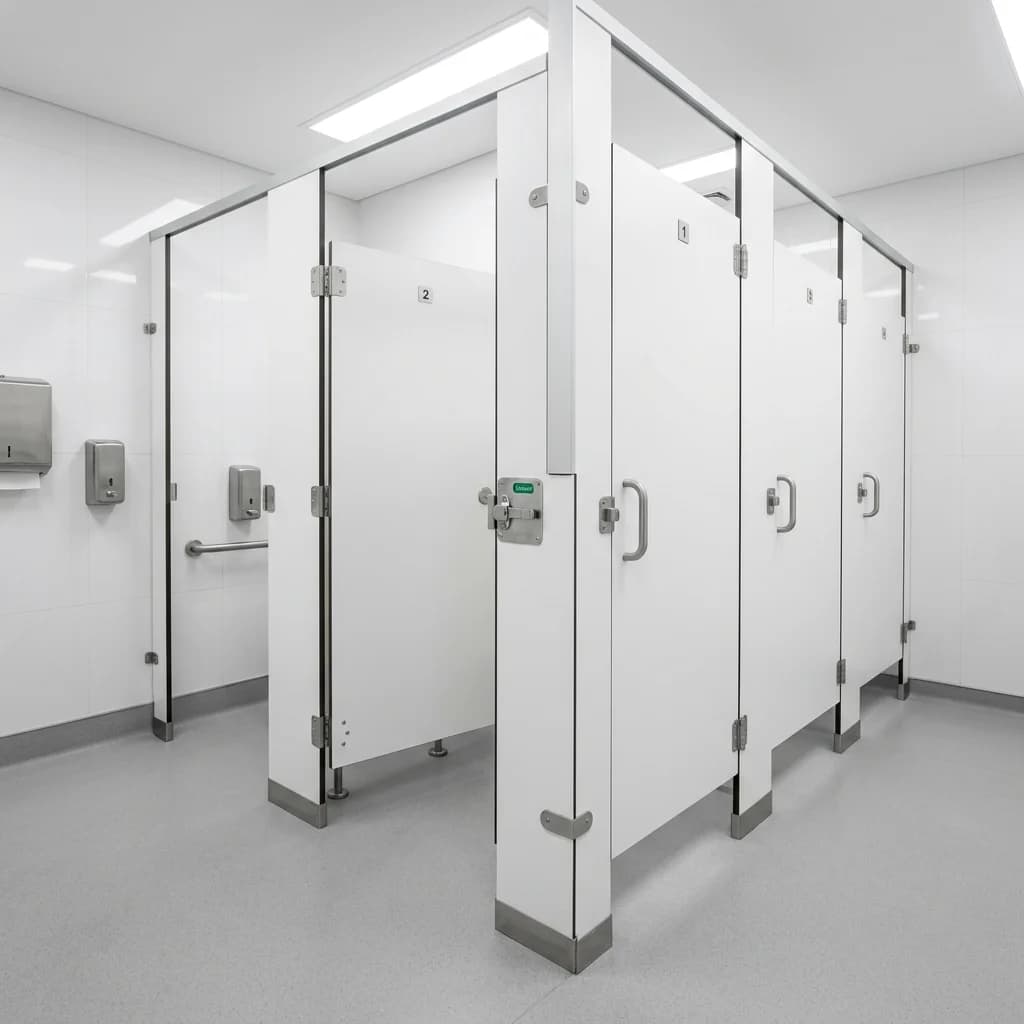
- Patient Room Restrooms: To provide complete privacy and flawless hygiene.
- Medical Laboratory Benchtops: Where work requires surfaces resistant to acids, chemicals, and staining.
- Privacy Dividers in ERs and ICUs: As a cleaner and more practical alternative to fabric curtains that harbor bacteria.
Conclusion
Designing modern hospitals requires finishing materials that support hygiene, cleaning, and maintenance workflows. Thanks to their non-porous surfaces, tolerance to many cleaning protocols, and impact resistance, Compact Phenolic panels are a practical choice for safe healthcare projects.
Frequently Asked Questions
Are HPL panels antibacterial by default?
Not always. Some products may offer special hygienic finishes, so the datasheet should be checked before approval.
Why do they suit hospitals?
Because they are non-porous and easier to clean, which is important in areas with frequent disinfection.
Can they be used in labs?
Yes, in some interior applications where cleanable surfaces are a priority.