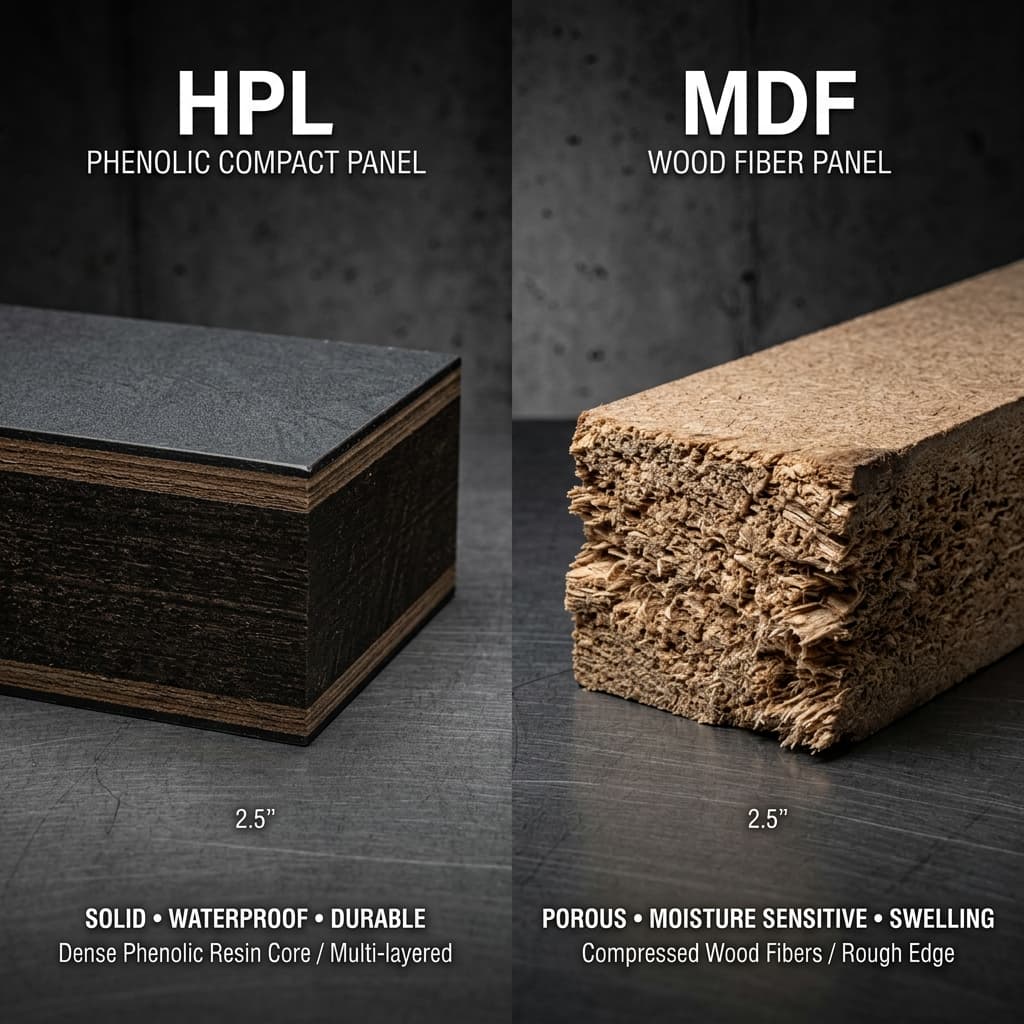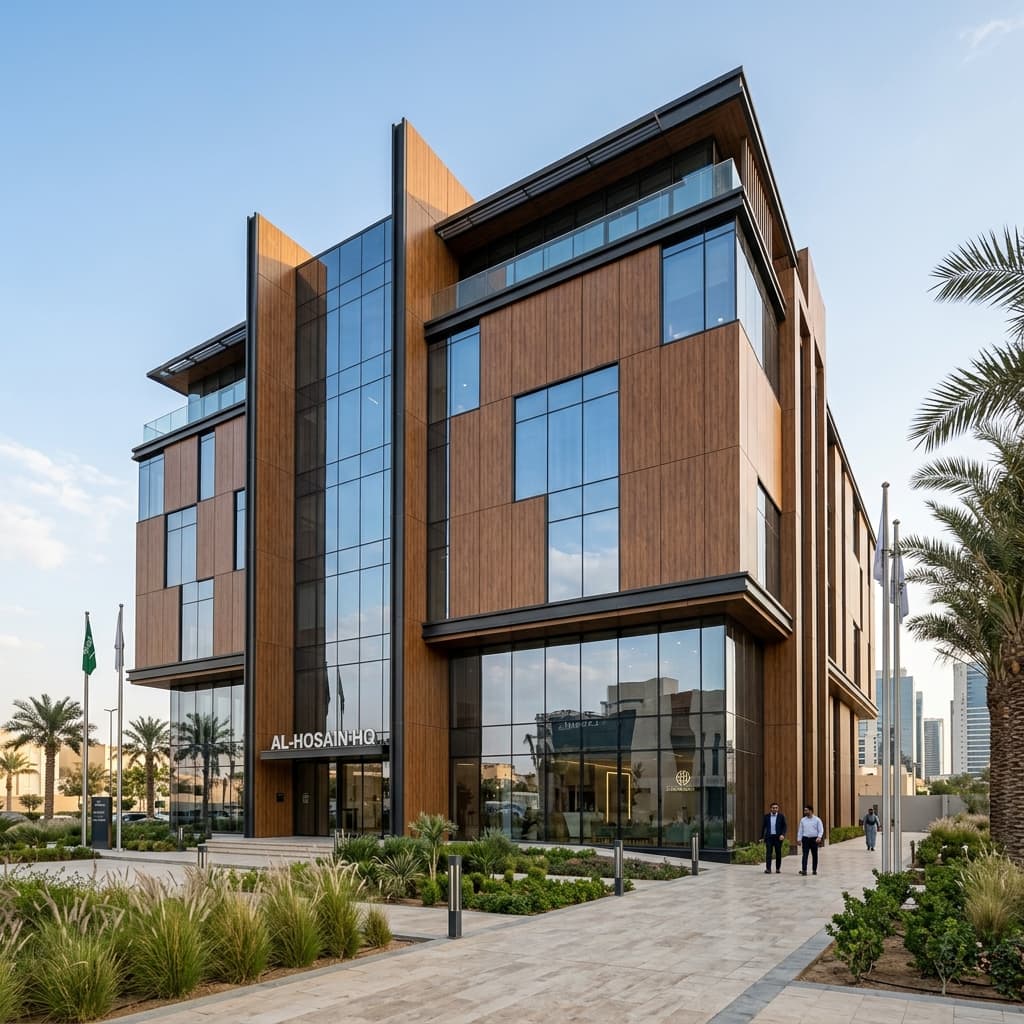
Ceramic and porcelain tiles have long been the default choice for wall cladding in washrooms and wet facilities. However, with the acceleration of modern construction and the continuous search for materials that offer a more hygienic environment and lower maintenance, HPL (Compact Phenolic) panels are emerging as a preferred alternative for interior wall cladding, especially in commercial projects and hospitals. So, what makes HPL a practical option?
The Grout Line Problem in Ceramics
The fatal flaw in ceramic tiling isn't the tile itself, but the grout lines separating them. Grout is highly porous, making it a fertile breeding ground for moisture absorption, dirt accumulation, and the growth of fungi and bacteria. In hospitals and restaurants where hygiene is critical, ceramics require continuous chemical cleaning to maintain grout color, which degrades it over time.
On the other hand, wall cladding with HPL uses large panels with precise or completely concealed metal profiles. This provides a smooth, continuous surface that prevents dirt accumulation and is easily sanitized with a single wipe.
Installation Speed and Site Cleanliness
Installing ceramics is "wet work", requiring the mixing of cement and adhesives. It produces a lot of mess and dust and takes a long time to dry. HPL installation is a "dry installation" process, where panels are fixed onto a metal chassis attached to the wall. This reduces installation time and allows plumbing and electrical wiring to run easily behind the panels, making future maintenance simple without the need to break the wall.
Durability and Impact Resistance
Ceramic is a hard but brittle material; a strong hit or collision with a solid object can crack a tile. Replacing a broken tile can also complicate visual consistency due to batch color differences. Compact HPL panels have strong impact resistance, making them an excellent choice for busy hospital and school corridors where transport carts are common and wall collisions are frequent.
Conclusion
For residential projects, ceramic may remain the preferred choice due to cost and personal taste. But for commercial projects, hospitals, malls, and schools looking for easier hygiene management, concealed maintenance, and rapid execution, wall cladding with HPL panels is often the stronger technical choice.
Frequently Asked Questions
Why is HPL often better in washrooms?
Because it reduces grout lines, is easier to clean, and can be installed faster in many project types.
Does it suit hospitals?
Yes, especially where cleanliness and maintenance efficiency matter.
Can it be used beyond bathrooms?
Yes, HPL wall cladding can be used in many interior commercial applications.